





On May 18, 2025, SchoolWall officially announced the cessation of its three-year operation, and its servers were shut down. At its peak, SchoolWall’s user sections and campuses covered 55 secondary schools in West Malaysia, with over 30,000 registered real-name users and 3 million monthly impressions, making it Malaysia’s sole and most widely used local social media platform built for students.
Welcome to this edition of corporate failure cases, I’m Eric Wong. Today, I’ll be sharing with you how Schoolwall failed under my operation.

What is Schoolwall doing?
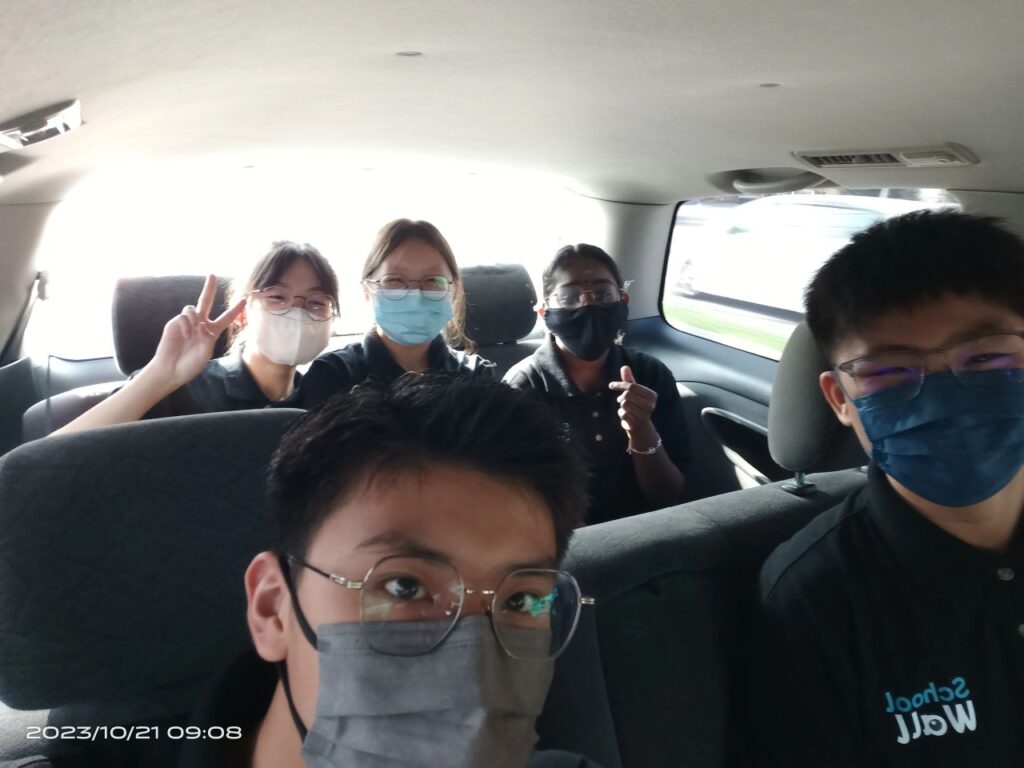
SchoolWall was co-founded by Wong Shin Chen (Eric) and early members such as Marcus Yap, Chin Hoi Kit, and Chiok Jia Jun. It is worth noting that this was a startup team composed of middle school students, all aged 15-16, which also laid the groundwork for subsequent failures.
Founding members discovered early on that social media environments used by teenagers were not friendly, as they were filled with scams, gambling, and pornographic advertisements, cyberbullying, and more. Therefore, the idea of creating a local social platform free of illegal advertisements, regulated, and with real-name registration spontaneously emerged.
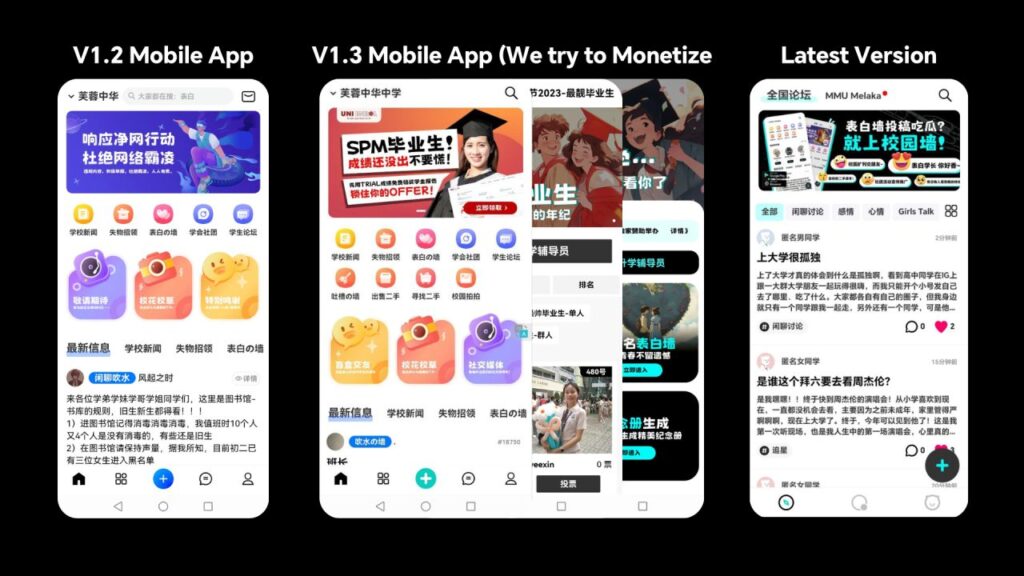
When SchoolWall was founded, the hope was to create an exclusive social circle and information integration platform for every campus, allowing information to circulate quickly within the campus. The SchoolWall forum has several main sections, such as: Lost and Found, Anonymous Confession Wall, Campus Announcements, and Student Forum. SchoolWall does not allow off-campus personnel to use or access it; students must use their student ID for real-name authentication to register and use it.
The idea for the entire project was inspired by Taiwan’s “Dcard” and China’s “Super Timetable” and “Renren.com”, and many functions are similar.
SchoolWall peak period
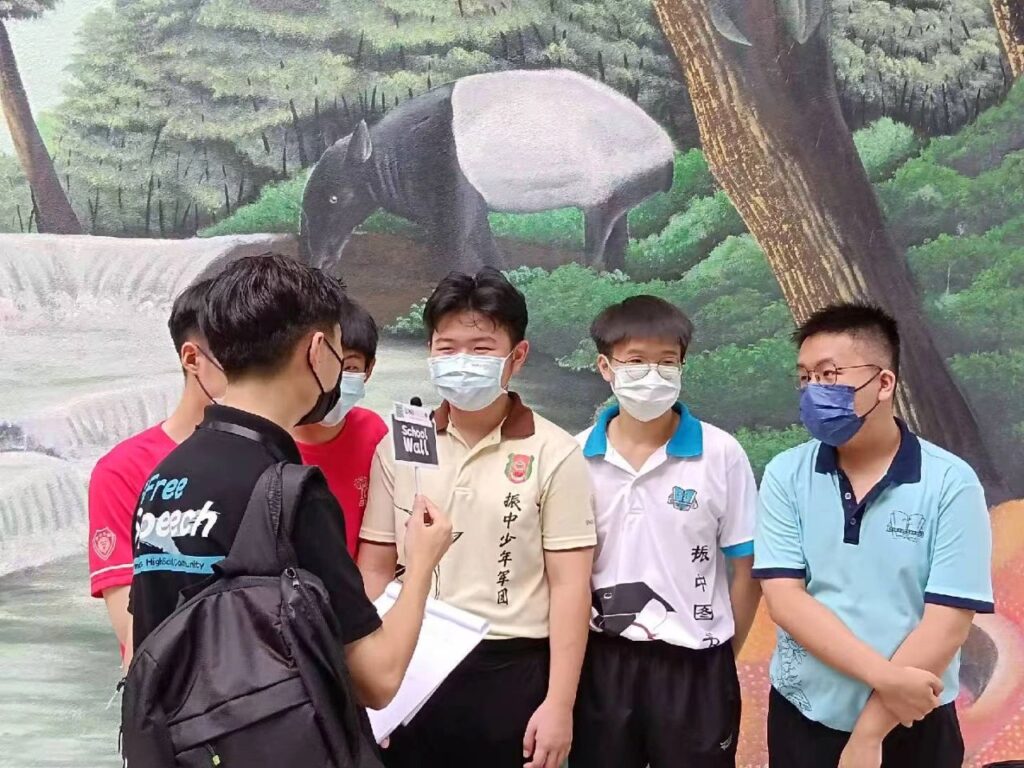
Without any external funding and with an all-student team, the SchoolWall project achieved the following results at its peak:
Coverage area: Covers 55 secondary schools in West Malaysia, which means directly entering the core social circle of Malaysian Chinese secondary school students.
High-stickiness real-name community: Over 30,000 real-name registered users, requiring student email or student ID verification. In an age of information overload, Schoolwall has created a high-threshold, extremely pure, and highly trusted “digital campus.”
Traffic Surge: 3 million impressions monthly. For a local vertical platform, this meant we captured the most concentrated attention of Malaysian teenagers at that time. During the “Campus Belle and Chad Voting Contest” campaign, the highest daily active users reached 18,000 concurrent online users.
Commercialization attempts: Provide precise advertising services for teenagers and middle school students to enterprises, mainly serving clients like Uni Enrol.
Public Welfare Project Promotion: SchoolWall collaborates with law firm Tham, Goh & Partners to invite renowned influencer Lawyerboy to popularize legal knowledge and provide free pro bono legal aid. In partnership with the Tutors in Action charity group, we offer free online tutoring for struggling students and workshops. We also collaborate with Forest to promote the APP, encouraging tree planting and environmental protection.
SchoolWall The Fading Turning Point
Between 2024 and early 2025, hidden dangers began to emerge in concentrated bursts:
The dilemma between management and academics: The founding team at this time was only 17-18 years old, facing college entrance, standardized tests, and heavy operational pressure. When the passion for entrepreneurship collided with the pressure of high school senior year academics, the team’s energy and decision-making speed significantly decreased. The operations team even halted at one point.
Startup Team Tight on Funds: Although a crowdfunding campaign was launched through MyStartr, attempting to introduce capital to promote user growth and upgrade the system, the crowdfunding result was a complete failure, raising not a single cent. Subsequently, they began seeking angel investors, but due to their age and limited experience, they did not receive any actual investment from investors. At that time, the team was completely unaware of the logic of capital operation.
The “double-edged sword” of real-name registration: While strict review mechanisms ensure purity, they also significantly increase customer acquisition costs and user entry barriers. In the internet landscape, which pursues economies of scale, this “heavy asset” review model makes operations cumbersome.
Missing business closed-loop: Although the campus market is precise, high school students have limited spending power. Brands tend to invest in large platforms rather than small vertical sites, which means we have 3 million exposures but struggle to convert traffic into cash flow sufficient to cover server expenses. Therefore, we plan to transition into university campuses.
Competing with big companies: However, in late 2024, Taiwanese campus social media giant “Dcard” entered the Malaysian market, which led to Schoolwall encountering significant competition and obstacles in its path into university campuses. They had a higher advertising budget, which left Schoolwall far behind in terms of customer acquisition in the university campus competition.
Compliance and Audit Pressure: As Malaysia tightens its social media regulations (MCMC policy), the legal costs and technical hurdles for content moderation for a small local platform have increased exponentially, like a ticking time bomb ready to explode at any moment.
The closed ecological loop of social giants: Although SchoolWall’s features are benchmarked against Dcard and Renren, the algorithmic evolution of Instagram (Threads) and TikTok has severely squeezed students’ fragmented time, causing the SchoolWall product to lose competitiveness.
Business Lessons Summary
Don’t conquer the world before you’ve conquered the streets: Schoolwall tried to cover 55 schools with extremely limited resources. Looking back, if they had scaled down, focused on 5 core schools, and established a mature profit model, the outcome might have been different, but it’s highly likely they would have still faced bankruptcy in the end.
Commercialization needs to precede traffic: A community based solely on sentiment is fragile. It is the biggest regret that Schoolwall did not complete the transformation from “community” to “commercial entity” during its traffic peak. Before generating traffic, one must consider how to monetize it. Forming a positive cycle and gradually growing is the correct approach.
Generational gap in the team: The biggest risk for middle school student startups is “unemployment upon graduation.” The failure to establish a tiered management team across different grade levels leads to the project’s paralysis once core members move to higher education.
Schoolwall’s entrepreneurial journey made me realize that building a local social platform in Malaysia is a wrong entrepreneurial direction.
The “ceiling effect” brought about by language fragmentation: Malaysia is a multilingual country, which naturally divides social platforms into three parallel universes: Chinese, English, and Malay. This creates a scalability dilemma. If you only operate a Chinese community, your user cap (TAM) is locked into the 6 million Chinese population, and the junior high school student group within that is even smaller. Finally, there’s the expansion cost. Overcoming language barriers means tripling the cost of your moderation team, content operations, and algorithm logic. For local startup teams with limited resources, this is an almost impossible task.
“Dimensionality Reduction Attack” by International Giants and Zero-Barrier Competition: Malaysia is a completely open internet market, and we are facing the top minds from Silicon Valley and Beijing. Users’ attention is being pilfered: When TikTok’s algorithm can precisely recommend the videos middle school students most want to watch, SchoolWall’s “campus forum” model, without algorithmic support, is naturally at a disadvantage in terms of sensory stimulation. Additionally, if companies want to place advertisements, their first choice is FB/IG’s precise targeting, not our small platform that requires human interaction. We are not competing with local peers; we are competing with Meta’s ad engine.
I’m Eric Wong, and I’m happy to share Schoolwall’s post-mortem with you. See you in the next story.
