





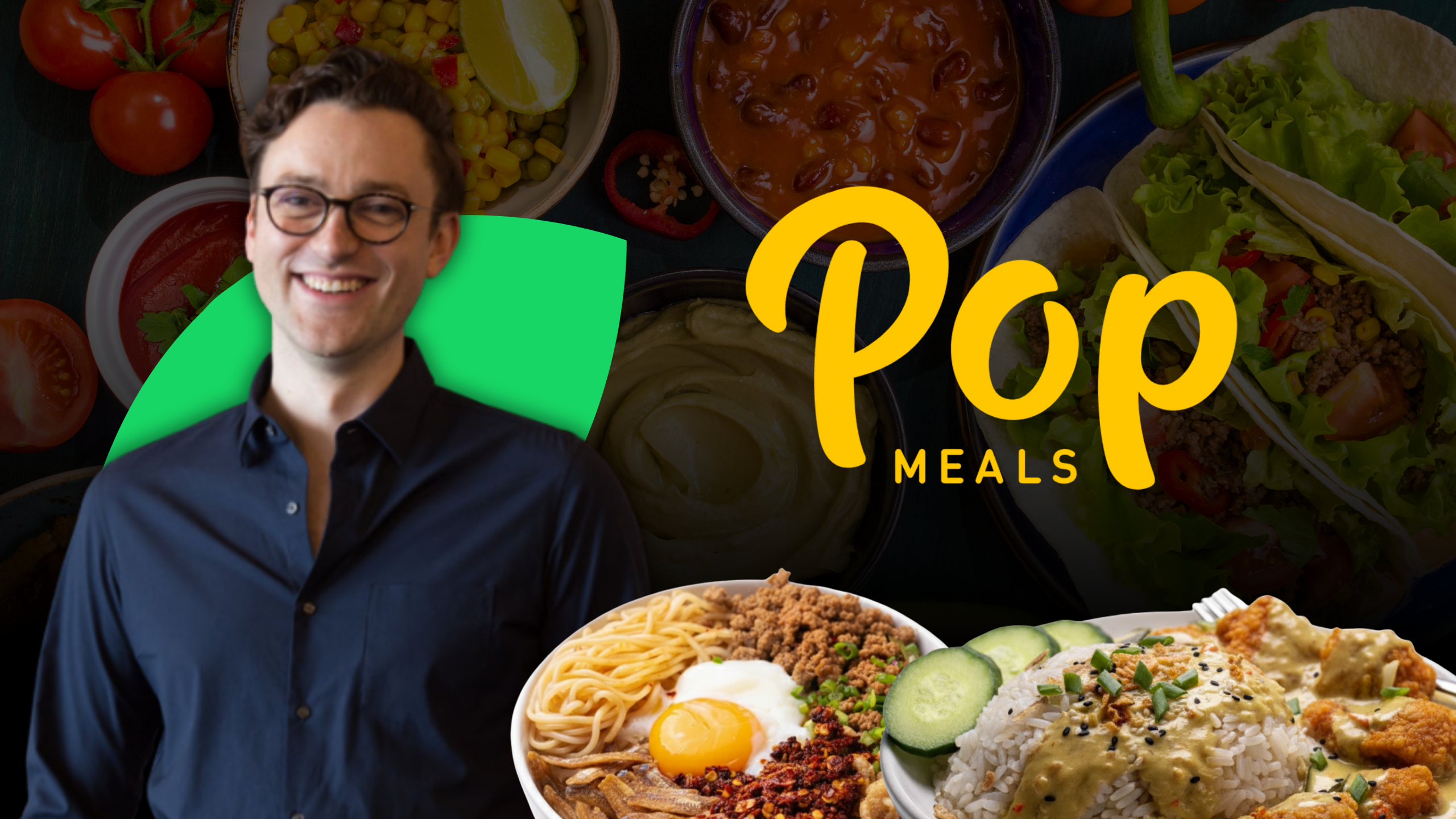
In November 2020, DahMakan officially announced the cessation of its brand operations, ending 5 years of brand operation. At its peak, the company was the first Malaysian startup selected for Silicon Valley’s top accelerator Y Combinator, raising nearly US$28 million in total funding and once considered a leader in Southeast Asia’s “full-stack” cloud kitchen model.
Welcome to this edition of corporate failure cases, I’m Eric Wong. Today, I’ll be dissecting with you: how DahMakan, a high-end, health-focused “chef-prepared” food delivery brand, gradually declined to the point where it had to undergo a complete restructuring and rebrand as Pop Meals to survive (although Pop Meals’ transformation was very successful).
I will share from the following sections:
- What is Dah Makan doing?
- Dah Makan’s heyday?
- Dah Makan’s Fateful Turning Point
- External environmental factors leading to the failure of Dah Makan
- Dah Makan transforms into Pop Meals
- The current situation of Pop Meals
- Business Lessons: The Return from Idealism to Pragmatism
What is Dah Makan doing?
DahMakan’s story began in Kuala Lumpur, Malaysia, in 2015. At the time, the food delivery market in Southeast Asia was on the cusp of an explosion, but the predominant models in the market were “aggregator platform” models similar to Foodpanda or early UberEats. DahMakan was born from the three founders’ keen observation of the market pain points at that time.
Founder Background and Motivation
DahMakan was co-founded by Jonathan Weins (CEO), Jessica Li (COO), and Christian Edelmann (CTO). The core team has a strong industry background, with Jonathan Weins and Jessica Li previously involved in the launch of Foodpanda in Hong Kong. Their experience at Foodpanda made them realize that while traditional third-party platforms solved the problem of “delivery,” they could not fundamentally solve the quality issue of “food.”
Working in a fast-paced corporate environment, the founders found it difficult to find healthy, affordable, and delicious lunch options amidst their busy schedules. Traditional restaurant takeaways often came with high delivery fees, inconsistent food quality, and overly processed options. Jonathan Weins pointed out that these poor dietary choices, resulting from busy lives, not only affected individual health but were also a common problem faced by many urban white-collar workers. Therefore, they decided to establish a company in Kuala Lumpur that could fully control product quality, pricing, and the delivery experience.
Definition of Full-Stack Cloud Kitchen Model
DahMakan’s core positioning is “Full-stack Food Tech Company.” This means the company does not rely on any existing third-party restaurants, but instead has its own Cloud Kitchen, its own team of chefs, and its own delivery fleet.
DahMakan’s core positioning is “Full-stack Food Tech Company.” This means the company does not rely on any existing third-party restaurants, but instead has its own Cloud Kitchen, its own team of chefs, and its own delivery fleet.
- Master Chef Cooking: We hire professionals like Chef Shamsul, a former five-star hotel executive chef, to develop healthy dishes that are MSG-free, low in oil, and low in salt.
- Simple and Easy: Users can complete an order with just three clicks on the App.
- Technology-driven: Using AI to optimize logistics routes and machine learning to analyze customer data to forecast demand.
DahMakan’s initial target audience was very specific: office workers in and around Kuala Lumpur (such as Petaling Jaya, Subang Jaya, etc.), dual-income families, and urban middle-class individuals who demand quality of life. They hoped to eliminate the physical storefront costs of traditional restaurants and invest the saved funds into ingredient quality, thereby offering a “five-star” dining experience at a lower price.
| Core elements | DahMakan (2015-2020) Background Details |
| Registered Body | Farm to Fork Sdn Bhd |
| Launch Year | November 17, 2015 |
| Core Philosophy | Self-control of the entire value chain from ingredient procurement to delivery |
| Product Features | Weekly rotating menu featuring 40 different international cuisines |
| Initial Pricing | Positioned at mid-to-high end, single meal prices are significantly higher than ordinary street food |
Dah Makan’s heyday?
From 2015 to early 2020, DahMakan’s development trajectory almost perfectly aligned with the standards of all “Silicon Valley-style” successful startups. It was not only highly favored in the capital market, but also made significant progress in technological R&D and multinational expansion.
Financing Milestones and Capital Market Recognition
DahMakan is an important icon in Malaysian startup history. In 2017, it became the first Malaysian company to be selected for the prestigious Silicon Valley startup accelerator Y Combinator (S17 batch). This endorsement brought it capital attention with an international perspective.
According to public funding records, DahMakan completed multiple rounds of funding at its peak:
- Seed and Pre-A Rounds: Secured $1.3 million in early 2017 and an additional $2.6 million in 2018. Investors include Y Combinator, Texas Atlantic Capital, etc.
- Series A Round: In May 2019, the company completed a $5 million Series A funding round. This round attracted global investors such as China UpHonest Capital and Silicon Valley Partech Partners.
- Series B: In February 2020, just before the global pandemic broke out, DahMakan completed its Series B funding round totaling $18 million.
Prior to the restructuring, DahMakan had raised approximately US$28 million in cumulative funding. These funds were primarily used to develop an “end-to-end operating system” supporting its full-stack operations and to expand into other Southeast Asian markets.
Market Expansion and Polpa Acquisition
Backed by capital, DahMakan took a crucial step towards internationalization in 2018. It officially entered the Thai market by acquiring Polpa, a local food delivery service brand in Bangkok. This acquisition was seen as a litmus test for replicating the full-stack model across Southeast Asia. By 2019, DahMakan had approximately 500,000 monthly active users (MAU) across Kuala Lumpur and Bangkok, delivering hundreds of thousands of meals each month.
In addition, DahMakan actively develops its enterprise-level business, with over 200 corporate partners in Kuala Lumpur, providing customized lunch solutions for employees of large enterprises. Its Google rating is as high as 4.7, and its Instagram followers exceed 125,000, demonstrating extremely high user satisfaction and brand loyalty.
Tech-enabled full-stack efficiency
DahMakan’s ability to attract top VCs lies in its application of technology. The company developed a closed-loop operating system that integrates artificial intelligence into every aspect of production and delivery:
- Smart path planning algorithm: DahMakan automates 80% of its logistics workflow using a proprietary routing algorithm. By collecting millions of real-time data points such as riders, traffic, and weather, the system can ensure a consistent 30-minute delivery without increasing labor costs.
- Demand Forecasting and Inventory Management: Utilize machine learning to predict order demand for different dishes in various regions at different times, enabling kitchens to prepare ingredients in advance and reduce delays caused by sudden orders.
- Automated Kitchen Equipment: In back-end production, DahMakan introduced preliminary automated cooking and quality control systems, aiming to reduce over-reliance on human chefs and improve standardization.
Dah Makan’s Fateful Turning Point
Despite its outward glamour, DahMakan was actually facing severe existential pressure at its peak. As a “full-stack” enterprise, it encountered three core challenges in the catering industry during its scaling process: rigid cost structure, out-of-control menu complexity, and narrow brand positioning.
- Heavy balance sheets and unit economics challenges
Unlike asset-light platform models like GrabFood or Foodpanda, DahMakan’s model is asset-heavy.
- High Fixed Costs: The company bears the rent of a large central kitchen, the salaries of a five-star chef team, and a huge proprietary delivery fleet.
- The Curse of Delivery Density: A self-owned fleet means that during off-peak meal times, the idle cost of riders is fully borne by the company. Although AI optimizes routes, when order volume is not dense enough, the cost per order (CPO) is still much higher than the model used by aggregation platforms that share delivery personnel across multiple brands.
- Profit margins are under pressure: Traditional restaurants typically have profit margins of around 3%, and while DahMakan has increased its profit margin to about 10% through cloud kitchens, this meager increase in gross profit is far from enough to offset the high technology development costs and customer acquisition costs (CAC).
- Operational Challenge from Menu Diversity
DahMakan initially catered to the discerning palates of the middle class, promising to rotate about 40 new dishes weekly from a database of 2,000 recipes. This strategy attracted users early on, but as it scaled, it became an operational nightmare:
- Supply chain pressure: Weekly menu changes mean highly unstable raw material procurement, making it impossible to lower purchasing costs through large-volume, long-term orders.
- Quality Control Difficulty: The chef team needs to frequently adapt to new recipes, which leads to increased quality fluctuations between different batches of products.
- Decision Burden: Too many choices can sometimes lead to user decision fatigue, and for a food delivery app, overly frequent menu changes are not conducive to building user expectations for “hit products.”
- “Healthy Premium” Positioning’s Repurchase Bottleneck
DahMakan has always been committed to building an image of “chef-cooked, healthy and delicious.” However, in the catering market, healthy food is often associated with “high prices” and “bland taste.”
- Market Ceiling: The user base that can afford healthy meals costing RM20-30 (approximately US$5-7) per meal for an extended period is relatively limited in the Southeast Asian market. This positioning becomes an obstacle once the company attempts to expand into second- and third-tier cities or the mass market.
- Low addictiveness: Healthy foods often lack the natural addictiveness of high-sugar, high-salt, and high-fat foods, resulting in lower repurchase rates compared to fast food products.
- External environmental factors leading to the failure of Dah Makan
In early 2020, just as DahMakan secured $18 million in funding, the global catering industry was hit by an unprecedented black swan event – the COVID-19 pandemic.
- Disappearance of core customer base
The work-from-home (WFH) policy caused by the pandemic dealt a devastating blow to DahMakan. Previously, nearly 70% of the company’s orders came from office workers in the CBD. When the city went into lockdown and offices were empty, DahMakan lost its core consumption scenario. Although home deliveries increased, household users were more price-sensitive and preferred larger restaurants that could be shared by the whole family or cheap street food.
- Dimensionality reduction attack of aggregation platform
During the pandemic, GrabFood and Foodpanda quickly monopolized consumer smartphone screens through aggressive subsidy strategies and a wider selection of choices. For users, being able to choose from tens of thousands of restaurants within one app is clearly more appealing than downloading a separate app specifically for a “healthy takeaway” brand. Although DahMakan tried to operate on these third-party platforms, this meant it not only had to pay commissions as high as 30% but also had to give up control over its most prized “delivery experience”.
- Shrinking and downgrading purchasing power
Malaysia’s economic fluctuations during the pandemic led to a significant downshift in consumer spending. DahMakan’s original high-end chef’s meal model paled in comparison to “value for money.” Consumers began to seek more affordable and filling individual items. If DahMakan did not change, its raised funds would quickly be depleted under the dual pressures of high operating costs and sluggish order volumes.
Dah Makan transforms into Pop Meals
Faced with a desperate situation, the founding team made an extremely bold and painful decision: completely kill off DahMakan and rebrand as Pop Meals.
On November 1, 2020, the brand restructuring was officially completed. This transformation was not a simple name change, but an upgrade to version 2.0 of the original full-stack model, with its core logic shifting from “chef-oriented” to “data-oriented.”
- Brand image and popularization of the audience
Pop Meals abandoned DahMakan’s middle-class elite brand style, adopting a highly saturated yellow as its main color, visually closer to global fast-food giants such as McDonald’s or KFC. Its slogan changed to the pursuit of simplicity, popularity, and high cost-effectiveness.
- Price Adjustment: By optimizing the supply chain and reducing SKUs, Pop Meals successfully lowered the price of its main products to the RM10-15 range, directly entering the mass consumer market.
- Threshold for unsubscribing from subscription services: Although the Member Club is retained, the emphasis is more on the value of a single purchase.
- Data-driven “Pop Chart” Menu Logic
The core innovation of Pop Meals lies in its introduction of a menu system similar to music charts.
- Survival of the fittest mechanism: The survival of each dish is no longer determined by the personal taste of the chef or founder, but by real-time sales data, ratings, and feedback. Well-performing dishes climb the “popularity chart” and gain more traffic; poorly performing ones are directly removed from the menu.
- Explosive Product Mindset: No longer pursuing 40 new dishes a week, but focusing on refining a few “national trending items” with extremely high popularity, such as Salted Egg Buttermilk Chicken.
- QSR Store Model: From the Cloud to the Ground
Pop Meals’ biggest strategic shift was the introduction of Quick Service Restaurants.
- Satellite kitchens combined with stores: Stores not only offer dine-in, but also serve as delivery relay stations for surrounding areas. This model greatly increases brand exposure and reduces the high cost of purely online customer acquisition.
- Online-to-Offline (O2O) Closed Loop: Through physical stores, Pop Meals can capture walk-in customers unfamiliar with food delivery apps, further expanding its user base.
| Transformation Dimensions | The evolution from DahMakan to Pop Meals |
| Business Focus | From “healthy/high-end” to “trendy/universal” |
| Decision mechanism | From chef experience driven to AI data ranking driven |
| Channel Structure | From pure cloud kitchens to cloud kitchens + physical chain stores |
| Cost control | Achieving “de-chefing” with automated cooking equipment |
The current situation of Pop Meals
As of 2024, the transformed Pop Meals has proven the resilience of its business model.
- Scale and Market Share
Currently, Pop Meals has over 55 outlets in Malaysia, making it one of the most widespread local fast-food brands in the Klang Valley. The brand is no longer limited to high-end office buildings, but has expanded into shopping malls, residential areas, and even transportation hubs (such as KLIA2).
According to the latest operating data:
- Cumulative supply: Over 4 million meals sold since the brand’s launch.
- User structure: Successfully penetrated students, ordinary office workers, and young families, solving the universal daily anxiety of “What to eat today?” (Makan Apa?).
- Deep integration of artificial intelligence
Pop Meals’ current technology application is more pragmatic, mainly reflected in improving unit economics:
- IoT-driven Standardized Cooking: In-store cooking equipment is fully system-controlled. Even employees without culinary skills can use smart ovens and automatic cooking pots to prepare meals of consistent quality by simply following system prompts.
- Smart Inventory & Waste Control: Pop Meals has extremely low food waste thanks to AI demand forecasting, which is critical for survival in the low-margin quick service restaurant business.
- Automated marketing engine: The system automatically analyzes users’ taste preferences and sends personalized promotional messages during the times when users are most likely to feel hungry. Its click-through rate and conversion rate are far higher than traditional mass emails.
- Commercial Logic of Star Products
Pop Meals’ menu is now supported by several highly competitive products, such as the Salted Egg Buttermilk Chicken priced at RM15.99. This product achieves excellent unit economics by leveraging large-scale centralized procurement and standardized production processes, all while ensuring a “mass-market popular” taste.
Inspiration and business lessons: A return from idealism to pragmatism
The brand’s demise of DahMakan and the rebirth of Pop Meals is one of the most exciting transformation cases in Southeast Asia’s food tech sector. It offers the following profound insights for entrepreneurs:
- Full-stack mode must have scale effects
DahMakan’s early failures demonstrated that if you want to control the entire value chain (from R&D to delivery), your gross profit per order must be able to cover extremely high fixed costs. This model is extremely vulnerable until a critical order density is reached. Pop Meals broke the cost curse of the full-stack model by introducing physical stores, effectively diluting the cost of “online operations” by increasing “offline traffic.”
- Avoid the “elitist” thought trap
The essence of the catering industry is mass consumption. DahMakan initially tried to change Malaysians’ eating habits (making them eat lighter, healthier chef-prepared meals), which itself was a very high-cost market education effort. Pop Meals chose to follow public sentiment, using data to find out what people already love to eat and standardizing it to the extreme. In the F&B industry, discovering demand is far easier to succeed than creating demand.
- Technology should serve efficiency, not premium
Many startups tend to use technology as an excuse for brand premium (“Because we have AI, our food is more expensive”). Pop Meals’ lesson tells us that the true value of AI and automation lies in reducing costs and increasing efficiency, thereby making products more affordable and universal. Technology truly forms a moat when it enables a consistently high-quality meal to be sold for under RM10 while the company can still profit.
- The Courage to Rebrand
After five years of building the DahMakan brand, Jonathan Weins and his team resolutely undertook a complete restructuring, a kind of decisive courage rarely seen in startups. If they had continued to cling to their original ideal of “healthy and high-end,” DahMakan might have completely disappeared with the pandemic. The ultimate goal of business is survival and growth, not the preservation of an initial idea.
From DahMakan to Pop Meals, this story is not just about a name change, but about how, in the era of big data, traditional catering industry and modern technology can be deeply integrated, and ultimately return to the essence of business. It marks the collective evolution of Southeast Asian food tech companies from pursuing “cool models” to pursuing “sustainable profitability.”
Thank you for reading this far. I am Eric Wong. See you next time.
